
Introduction
Tooth pain can sometimes be more than just temporary discomfort. Persistent pain, sensitivity, swelling, or pain while chewing may indicate a deeper dental problem that requires immediate attention. One of the most effective treatments for saving an infected or severely damaged tooth is root canal treatment (RCT).
Unfortunately, many people feel nervous when they hear the term “root canal” because of outdated myths that describe the procedure as painful or uncomfortable. In reality, modern root canal treatment is designed to relieve pain, not cause it. Thanks to advancements in dental technology and anesthesia, today’s procedures are much safer, more comfortable, and highly effective.
If your dentist has recommended a root canal treatment, it is natural to have questions or concerns. Understanding what happens before, during, and after the procedure can help you feel more confident and prepared.
At Dr Prince Dentals, patients receive advanced and painless root canal treatment supported by modern dental technology and personalized care. The clinic offers comprehensive dental services including root canal treatment, braces, aligners, cosmetic dentistry, implants, laser dentistry, crowns, and preventive dental care in Bangalore.
If you are preparing for a root canal or experiencing symptoms of tooth infection, this guide will help you understand everything you should know before the procedure.
What is Root Canal Treatment?
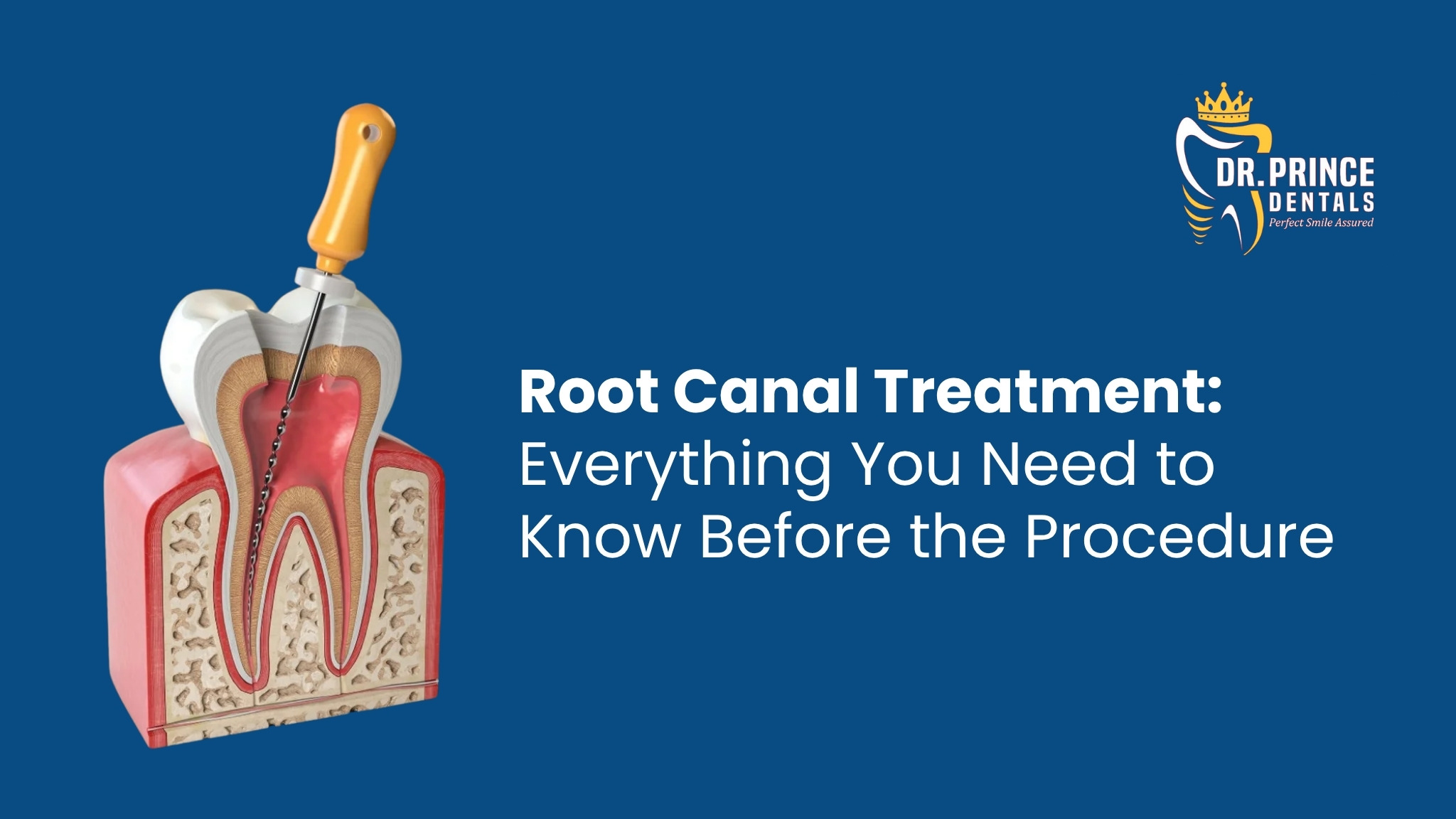
Root canal treatment is a dental procedure performed to treat infection or damage inside a tooth while preserving the natural tooth.
Inside every tooth lies a soft tissue called the dental pulp, which contains:
- Blood vessels
- Nerves
- Connective tissue
When bacteria reach the pulp due to deep decay, cracks, injury, or untreated cavities, infection may develop.
A root canal treatment helps:
- Remove infected pulp
- Relieve tooth pain
- Prevent infection spread
- Save the natural tooth
- Restore chewing function
Instead of removing the tooth, RCT focuses on preserving it and restoring normal oral function.
Modern root canal procedures are safe, effective, and focused on patient comfort.
Signs You May Need a Root Canal
Many patients wonder when root canal treatment becomes necessary.
Some common symptoms include:
Persistent Tooth Pain
Pain that continues for several days or worsens over time may indicate pulp infection.
Sensitivity to Hot and Cold
Lingering discomfort after eating or drinking hot or cold foods can signal nerve irritation.
Pain While Chewing
Discomfort during biting may indicate infection or tooth damage.
Swollen or Tender Gums
Swelling near the painful tooth may suggest bacterial infection.
Tooth Discoloration
Darkening or discoloration sometimes occurs due to nerve damage.
Tooth Abscess
Pus formation or gum swelling around a tooth may indicate serious infection.
Ignoring these symptoms may worsen the condition and increase treatment complexity.
What Causes Tooth Infection?
Several issues can damage the pulp and lead to infection.
Deep Cavities
Untreated tooth decay may spread inward.
Cracked or Broken Teeth
Cracks allow bacteria to enter deeper layers.
Dental Injury
Trauma may damage internal tooth nerves.
Repeated Dental Procedures
Multiple treatments on the same tooth may weaken pulp tissue.
Untreated Gum Problems
Severe oral infections can affect surrounding tooth structures.
Early diagnosis usually improves treatment outcomes.
Why Root Canal Treatment is Better Than Tooth Extraction
Many people ask whether removing the tooth is easier than getting a root canal.
Whenever possible, saving the natural tooth is preferred.
Benefits of root canal treatment include:
Preserves Natural Teeth
Natural teeth function better than replacements.
Better Chewing Ability
Maintains bite strength and eating comfort.
Maintains Jaw Alignment
Prevents nearby teeth from shifting.
More Cost-Effective Long Term
Replacing missing teeth often costs more.
Better Smile Appearance
Preserves the natural structure of your smile.
Saving a healthy tooth is usually the best long-term option.
What Happens Before the Procedure?
Understanding the process can help reduce anxiety.
Step 1: Dental Examination
The dentist examines symptoms and identifies infection.
Step 2: Dental X-Rays
Imaging helps assess pulp damage and infection severity.
Step 3: Treatment Planning
The dentist explains the procedure and treatment expectations.
Step 4: Local Anesthesia
The area is numbed to improve comfort.
At Dr Prince Dentals, modern anesthesia techniques help make root canal procedures more comfortable and patient-friendly.
What Happens During Root Canal Treatment?
Modern root canal treatment is usually straightforward.
Step 1: Numbing the Tooth
The area is anesthetized for comfort.
Step 2: Accessing the Tooth
A small opening is created to reach infected pulp.
Step 3: Removing Infection
Damaged tissue is removed carefully.
Step 4: Cleaning and Disinfection
The inner canals are cleaned thoroughly.
Step 5: Sealing the Tooth
The cleaned tooth is sealed to prevent reinfection.
Step 6: Crown Placement
In many cases, a dental crown strengthens and protects the tooth.
Treatment length varies depending on infection severity and tooth condition.
Is Root Canal Treatment Painful?
One of the biggest misconceptions about root canals is pain.
Modern RCT is generally designed to relieve pain rather than cause it.
With local anesthesia and advanced technology, many patients report treatment feels similar to a routine dental filling.
You may experience mild soreness after treatment, but this usually improves quickly.
At Dr Prince Dentals, the focus remains on painless root canal treatment and patient comfort.
Benefits of Root Canal Treatment
Root canal treatment offers several long-term advantages.
Pain Relief
Infection and discomfort are removed.
Saves Your Natural Tooth
Prevents unnecessary extraction.
Prevents Infection Spread
Stops bacteria from worsening.
Restores Functionality
Helps restore chewing comfort.
Supports Long-Term Oral Health
Maintains smile alignment and oral balance.
Early treatment usually improves success rates.
What to Expect After the Procedure
After treatment, mild tenderness may occur for a short time.
Patients are usually advised to:
- Avoid chewing hard foods initially
- Maintain oral hygiene
- Take medications if prescribed
- Attend follow-up appointments
Most patients return to normal activities quickly.
Tips to Prepare for Root Canal Treatment
Before your procedure:
Eat Before Your Appointment
You may feel more comfortable afterward.
Follow Medication Advice
Inform your dentist about medical conditions.
Stay Relaxed
Modern dentistry makes treatment highly manageable.
Ask Questions
Understanding the process reduces anxiety.
Preparation helps improve comfort and confidence.
Why Choose Dr Prince Dentals for Root Canal Treatment?
Patients trust Dr Prince Dentals because of:
Painless Root Canal Treatment
The clinic focuses on minimizing discomfort.
Advanced Dental Technology
Modern tools improve precision.
Personalized Patient Care
Every treatment plan is customized.
Comprehensive Dental Services
Patients receive preventive, restorative, orthodontic, and cosmetic care under one roof.
Comfortable Dental Experience
The clinic emphasizes patient comfort and stress-free treatment.
This patient-focused approach supports better outcomes and confidence.
Conclusion
Root canal treatment is one of the safest and most effective ways to save an infected tooth and restore oral comfort. Understanding the procedure beforehand can help reduce fear and prepare you for a smooth treatment experience.
At Dr Prince Dentals, patients receive advanced and painless root canal treatment supported by personalized care and modern technology. Whether you are experiencing tooth pain, sensitivity, or infection symptoms, timely treatment can help save your natural tooth and restore your smile comfortably.
Seeking early dental care often prevents complications and supports healthier long-term oral health.
Contact Details
Address: Dr Prince Dentals, Kasturi Nagar & OMBR Layout, Bengaluru, Karnataka
Phone: Contact via clinic website
Timings: Please contact clinic for updated timings
Website: https://drprincedentals.com/